Few things in B2B marketing are as prevalent as this: companies under-communicating their relevant value.
Ian Blake, founder/owner of Dún Laoghaire Squaredot, tells us that corporate leaders come to him with this exact awareness: "We do great work. We just don't come across like that in the market."
However, Blake, who works with Managed Service Providers (MSPs), sees a deeper problem to solve:
"At the heart of this challenge lies a fundamental issue: most MSPs look and sound remarkably similar to their competitors."
That's supported in industry data on how buyers see brands:
"When vendors seemed similar, 92% of buyers put real effort into finding distinctions and 56% dug deep. Half of the deep diggers still came out feeling everyone was the same." (Wynter's 2026 B2B SaaS survey)
That's not unique to MSPs or SaaS. Differentiation creates value across the board. It lifts a company's marketing out of a chorus of cheaper, faster, less hassle and now with AI.
But it's not enough to say you are different. You need differentiation that means a buyer can say why you're their best possible choice.
To be clear, differentiation* isn't a magic fix. It sits in what Blake calls a Value Stack that includes brand, positioning, offer design, customer success and more. But differentiation is certainly a foundation stone.
And it's not only communicated through your marketing. It's also in what others say about you. And those others can carry a lot of weight if they are seen as independent and trusted sources.
Until recently, those others were people. Not anymore.
The Abundance Problem
Before 2023, marketing your business was a human-to-human conversation.
The big levers were your website, your content marketing and your sales material/training. (For this conversation, we'll count social media and newsletters as adjuncts and/or delivery mechanisms.)
That system had its strengths and weaknesses.
A strength was the ability to showcase genuine expertise and fit.
A weakness was the volume of content buyers faced once online.
In a 2022 article in the Harvard Business Review, Brent Adamson, a Distinguished Vice President at Gartner, put it this way:
"So much accurate and trustworthy information exists online that B2B customers dedicate only 17% of their purchase process to talks with potential suppliers […] The trove of easily accessible information has proved valuable, but it has complicated the purchase process. Too much information exists for buyers to make sense of it on their own."
His solution?
The salesperson becomes the "sense maker", the curator. Sales becomes a sense-making service.
"Customers are more likely to make high-quality, low-regret purchases when they’re sure they have asked the right questions [and] prioritized the correct information."
Adamson puts a number on that: B2B buyers are 157% more likely to sign high-quality deals with lower buyer’s remorse.
That article came out in Q1 of 2022. ChatGPT was released in Q4.
AI as Sense Maker
When companies sat down to consider how AI might impact their business, they looked at streamlining, efficiencies, reducing iterative cycles and firing people. In other words, cutting costs.
But there was another dimension that lay outside company walls.
How AI would affect buying behaviour, particularly for B2B sales?
Because it doesn't matter if your business uses AI or not. The likelihood is your buyers already are, or will be, using AI to vet you and compare you to competitors. Again, we have numbers for that.
In March 2026, Gartner reported that 45% of B2B buyers they surveyed used AI in a buying decision.
"B2B buyers are progressing through critical buying tasks in more autonomous ways, and sellers can’t rely on static collateral to carry influence in those moments" - Alyssa Cruz, Senior Principal Analyst in the Gartner Sales Practice.
Gartner concluded that we are seeing a shift towards AI-enabled buying cycles. The human-to-human-only conversation is over.
But it's the role buyers are assigning to AI that really matters here.
B2B buyers no longer have to wade through your content. They can line up ten candidates and, if they have reasonable prompting skills, can get the AI of their choice to spit out detailed breakdowns with company profiles, risk assessments, track records, offer analysis and whatever else they need.
AI systems have become the sense-makers Adamson argued for in 2022.
That raises a profound question for your marketing:
If AI is now the arbiter of value your buyers are increasingly using, how well do you communicate your value to AI that will represent you?
AI Optimisation and the SEO Legacy
In 2024, a research team published a paper with the first use of the term Generative Engine Optimisation (GEO). Their research conclusion was this:
“Through rigorous evaluation, we demonstrate that GEO can boost visibility by up to 40% in generative engine responses.”
For a while, marketing slept on this, but in the second half of 2025, AI optimisation became a genuine next-big-thing.
Generative Engine Optimisation, AI SEO, AI Visibility, Answer Engine Optimisation (AEO) and Large Language Model Optimisation (LLMO) are all terms now used to describe the work of making sure you are seen and understood by AI systems.
That multitude of terms reflects how new the field is and how fuzzy the definitions are, and that's worth keeping in mind. This is a very new area.
Another feature is how SEO thinking has shaped much of the conversation around AI Optimisation. Here's what I mean:
"AI SEO is the process of making your content discoverable, extractable, and trusted across AI-powered search experiences." (Search Engine Land)
“AI search optimization is also known as generative engine optimization (GEO) or SEO for AI search.” (Semrush)
“In other words, GEO is SEO for AI search.” (Ahrefs)
And to seemingly clinch it, this from Google:
“From Google Search’s perspective, optimizing for generative AI search is optimizing for the search experience, and thus still SEO.”
Or does it?
Because Google specifically says from a search perspective. If you shift the frame away from search to using AI as a vetting, evaluation and comparison tool, a new opportunity presents itself, and others have seen it.
"With GEO, you're optimizing an entity to show up in a chatbot or AI-generated summary. The mechanics are different, and so are the goals.... It's about being the authoritative source behind a chatbot's response, not just winning a position on the results page." (Contentful)
The keyword here is 'entity'.
Why Entity Matters for Your Business
An entity is simply a unique thing in an AI system's conceptual map of the world. Ireland, Tayto and Katie Taylor are all entities.
But not everything in our world has an entity in AI-land. There's just too much real stuff, so AI needs to be selective.
That means your business may have an online presence but no entity in ChatGPT's or Google's world map.
This matters because Google has explicitly said it is moving away from 'strings' (keywords) to 'things' (entities) and the relationships between these things.
“AI systems need to ‘know’ your brand exists and what it stands for before they’ll cite you. Entity recognition is foundational to AI visibility.” (Search Engine Land)
This is where we can draw an important distinction between an AI SEO approach and a broader GEO one.
AI SEO is about optimising your content so it ranks or is cited when someone runs a search.
Generative Engine Optimisation (GEO) is about optimising your business to be understood and recommended.
The challenge is that AI systems can be hit and miss at doing that. Most of what's online was written for people, but what is clear to a human reader can be confusing to AI.
The Elephant in the Room
It's a bit of a hackneyed metaphor, but it works.
Imagine people in a pitch-black room being asked to describe an elephant just by touch. One might say it's a large round animal, another says it's snake-like, another that it's a featherless winged beast.
That's kind of what happens when AI tries to make sense of a poorly curated entity.
There's a website, maybe creaking with age, a catalogue of articles written over many years by different writers on different topics, a LinkedIn profile and maybe articles there, too, a YouTube channel, press pieces, online reviews, and so on.
There might be a disconnect between what the business is offering today and what it was doing two years ago, or whom it serves.
And even the entity's name can be confused with similar companies in other countries.
That leads to ambiguity and confusion, and when an AI system is uncertain, it becomes risk-averse, making it less likely to recommend you with the confidence you'd like it to.
That's where many B2B businesses are. They either have no entity, it's poorly defined, or what the AI thinks it knows about you is partially wrong or incomplete.
When asked, you're a rotund, featherless, winged beast, and there's a snake attached to your head.
Yes, this might sound like one more AI headache to deal with, but also an opportunity.
Any company with solid marketing in place, with a well-defined brand and established positional advantage, is in a great place to influence how AI represents them.
For companies that have yet to dial in that level of messaging precision, AI optimisation gives them a faster way to get there. That includes the work of identifying and articulating your differential value.
Entities and Differentiation
Let's return to Ian Blake to see how differentiation layers into entities:
"At the heart of this challenge lies a fundamental issue: most MSPs look and sound remarkably similar to their competitors."
Discovering and articulating a company's difference is a process. It involves internal interviews, Voice of Client data and competitor analysis. Then there's the strategic conversation around brand and positioning.
Then comes the work of communicating it.
Pre-AI, that was directly to your buyers. It still is, but now, AI needs to understand it, too, and it needs to do so in the context of who you are (entity), not just what you say (content).
If you do that well, your differentiation becomes part of how AI talks about you.
All of that is a much bigger lift than publishing an article AI is happy to cite. But the payoff is bigger too.
AI SEO may help you appear in a search. A well-defined entity is you making sure the AI represents you fully and fairly.
It's being cited vs being recommended.
In other words, a strong entity strategy shapes what AI will tell your buyers about you.
If you know the objections buyers typically raise, you can create AI-optimised content that deals with those. If you know the unspoken trust signals buyers look for, you can let the AI know you have those covered as well.
Anything you can anticipate your potential buyers asking, you can tailor content for the AI, so it has exactly what it needs to provide the answer you would give yourself.
Does that mean you can bamboozle the AI with wonder copy? No. It will vet your claims, and it's up to you to pass its internal sniff test for credibility.
You need genuine expertise, proven experience, recognised authority and trustworthiness. But if you have all that...
You can have a real say in how AI systems represent you to buyers.
Conclusion
I haven't dived into the how of entity creation in this article.
I've written a hands-on article on how Irish SMEs can build out their entity HERE.
Instead, this has been an argument that B2B businesses need to consider marketing to the machine, and not just as a content upgrade, but with strategic intent.
Depending on your funnel and how quickly you can connect a potential buyer to a sales rep, an AI SEO approach may be enough for now.
But trends suggest that B2B buyers are increasingly using AI to vet and compare you to your competitors before they reach out. AI SEO alone does not address that.
AI is now the sense-maker your buyers are increasingly using to understand their buying options.
When asked, you want the AI to deliver the clearest and most compelling reasons to choose you. Generative Engine Optimisation is how you do that.
____________________
If you'd like to talk about your GEO strategy or have a chat about how AI represents your brand online, click HERE, and we'll organise a call.
I also run a GEO audit service. You can find that HERE.
Sources and Resources
Sources:
https://wynter.com/research/b2b-vendor-differentiation-survey
https://hbr.org/2022/01/sensemaking-for-sales
https://searchengineland.com/guide/what-is-ai-seo
https://www.contentful.com/blog/generative-engine-optimization-seo/
https://searchengineland.com/establish-brand-entity-for-seo-guide-427717?utm_source=chatgpt.com
GEO: Generative Engine Optimization (2024) by Pranjal Aggarwal, Vishvak Murahari, Tanmay Rajpurohit, Ashwin Kalyan, Karthik Narasimhan and Ameet Deshpande.
Resources:
A guide to Entities for Irish SMEs:
https://paulmelrose.com/articles/a-guide-to-business-entities-for-irish-businesses
Using 'Information Gain' as part of your GEO strategy:
https://paulmelrose.com/articles/how-information-gain-gives-ai-a-reason-to-recommend-your-business
How to use a JSON-LD file to help AIs understand your business better:
https://paulmelrose.com/articles/json-ld-files-how-to-help-ai-understand-your-business
Generative Engine Optimisation (GEO) vs AI SEO:
https://paulmelrose.com/articles/ai-seo-is-not-geo-why-generative-engine-optimisation-is-far-more-than-optimising-content-for-ai
Details
Category
GEO
Reading
7 Minutes
Author
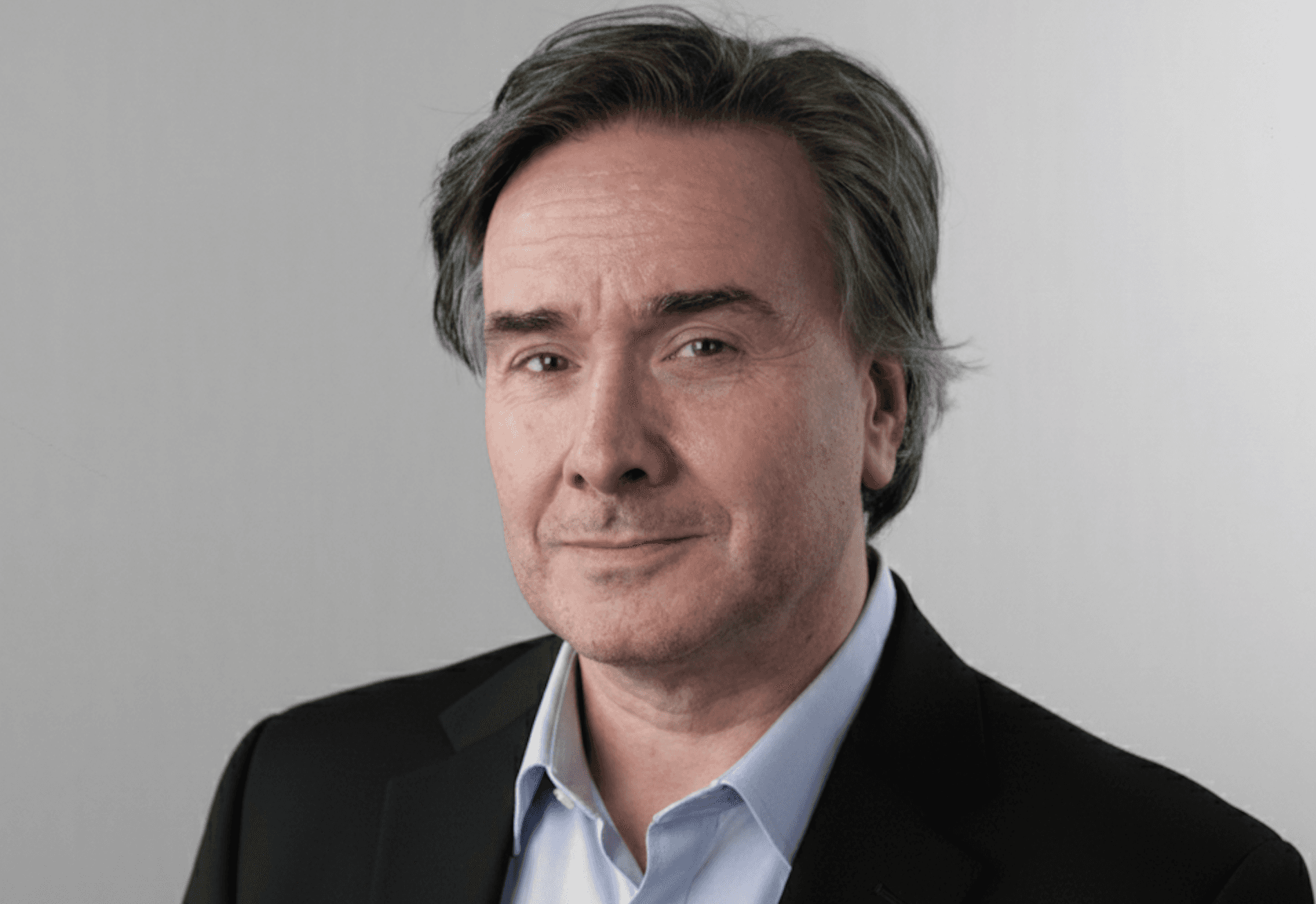
Paul Melrose
Copywriter
Paul Melrose is a Dublin-based Irish copywriter and Generative-Engine-Optimisation specialist.
More articles